For Ben Husaby, the path to cross-country skiing in two Olympics began as a boy growing up in Eden Prairie. “I would go out near the old high school (now Central Middle School) and pack down trails,” recalls Husaby, now living in Bend, Ore. “After dinner, I would train in the dark, using the lights of the school to see.”
Big dreams were hatched on those tracks. The 1984 Eden Prairie High School graduate went on to compete (but did not medal) in two Olympics, the 1992 Winter Games in Albertville, France, and the 1994 games in Lillehammer, Norway. “Those are the most memorable experiences for me,” he says. “Racing became something I did because I was good at it.”
Husaby is one of a handful of former Olympians who have called the southwest metro home at one time or another. Most of their Olympic experiences didn’t end up with a medal around their necks, but they are proud of their moment on the world’s stage. “People ask me, ‘Hey, did you win a medal?’” Husaby says. “Well, I did not, but I have positive recollections from my experience. And for me, that was good enough.”
Author Patrick Mader profiled Olympians with Minnesota roots in his 2015 book, Minnesota Gold, written with Joel Rippel. (He is currently working on a follow-up book.) From what he’s learned, the Olympians don’t view all the hard work they do to excel in their particular sport as a sacrifice. Instead, they call it a tradeoff. “Sacrifice implies you’re doing it for somebody else,” says Mader, a retired elementary school teacher from Northfield. “But, they’re doing it for themselves. They wanted to see if they could compete with the best.”
Mike Houck, a Greco-Roman wrestler who was an alternate at three Olympics in the 1980s and now lives in Victoria, is featured in the book. “He’s doing a great thing for the sport,” Houck says of Mader. “Amateur athletics, especially with the minor sports, get such little attention, and you got these world-class high-level athletes running around in public, and nobody knows who they are, which is fine, because they don’t get into it for that.”
In honor of the 2018 XXIII Winter Olympics in PyeongChang, South Korea (Feb. 9-25), here’s a look at seven athletes with local ties who have competed in past games.
Andy Bisek
Greco-Roman wrestling
2016 Summer Olympics

Andy Bisek, a Greco-Roman wrestler, who competed but did not medal at the Rio Summer Olympics in 2016, has had much success on the mat after leaving Chaska High School. That includes winning bronze medals at both the 2014 and 2015 World Wrestling Championships.
Bisek admits leaving Rio without a medal was disappointing. As NBC noted in his 2016 athlete profile, “USA wrestling’s best mustache” was its best hope for a Greco-Roman medal in Rio. “I still think how things for me in Rio were just right there on the edge and could go either way,” he says. He takes solace in his two world championship bronze medals. “In the last 50 to 60 years of Greco-Roman wrestling, the U.S. has won only about 40 medals in the World Championships and Olympics,” he says. “To have two of them, I feel pretty good about that.”
These days, Bisek is an assistant Greco-Roman wrestling coach at the Northern Michigan University U.S. Olympic Training Site in Marquette, Mich. Bisek has no plans to compete in the 2020 Summer Olympics in Tokyo or any other ones. “Hate to say definite, but I’m pretty sure,” he says.
Rachel Bootsma
Swimming
2012 Summer Olympics
Rachel Bootsma keeps the gold medal she won swimming at the 2012 Summer Olympics in London locked away in a safety deposit box. The 24-year-old Eden Prairie native says it’s one of her most prized possessions. She earned it as a member of the U.S. team in the 4×100-meter medley relay.
“I often forget the magnitude of my accomplishment until I show it to others, and they are in awe of it,” she says. “Swimming at Cal, I was surrounded by countless other Olympians who have multiple Olympic medals, so it just became a part of my normal life. Only when I step back, I truly see how special it is.”
Life moved fast in and out of the pool for Bootsma—then just 18—in 2012. She graduated from Eden Prairie High School, competed in the Olympics, and then started her freshman year at the University of California-Berkeley.
She missed out on making the 2016 Olympics. Although disappointing, she knows “everything happens for a reason, and watching the Olympics on TV was a little less stressful than being there.”
Bootsma, now retired from swimming, has been in a pool just a handful of times since the 2016 trials. “I miss it, but I swam every day twice a day for far too long,” she says. “The sport gave me everything I could have ever dreamed. I owe the sport and the people who gave me those opportunities everything. But, I just need a little break.”
Mike Houck
Greco-Roman wrestling
1980, 1984, 1988, Summer Olympics (alternate)
Mike Houck was supposed to win America’s first gold medal in Greco-Roman wrestling at the 1984 Summer Olympics in Los Angeles. “If you told me I wasn’t going to make the Olympic team, and win the gold medal, I would have said you were crazy,” says Houck, who lives in Victoria.
Standing in his way was fellow U.S. wrestler Steve Fraser. Houck had beaten him five times in a row going into the final Olympic trials. Fraser narrowly won. Houck went to the games as an alternate, sitting in the stands while Fraser won gold. The longtime teacher at Chaska Middle School West looks back with no regrets. “The medal’s awesome, but who I am, and who I developed as part of being a representative of the United States and the sport of wrestling, that’s the stuff that stays,” he says. “And that’s the stuff that is most valuable.”
Houck was the first American to win gold at the World Wrestling Championships in the Greco-Roman discipline. That 1985 accomplishment is the pinnacle of his National Hall-of-Fame wrestling career. “I wrestled out of my head,” he says. “It was just magical.”
Houck is working on a memoir of his wrestling career. Besides serving as an alternate for the 1988 Summer Olympics in Seoul, he would have in 1980, too, if the U.S. didn’t boycott the Moscow games.
After his wrestling career ended, he was the national Greco-Roman coach for five years, including the 1992 Summer Olympics in Barcelona.
Ben Husaby
Cross-country skiing
1992, 1994 Winter Olympics
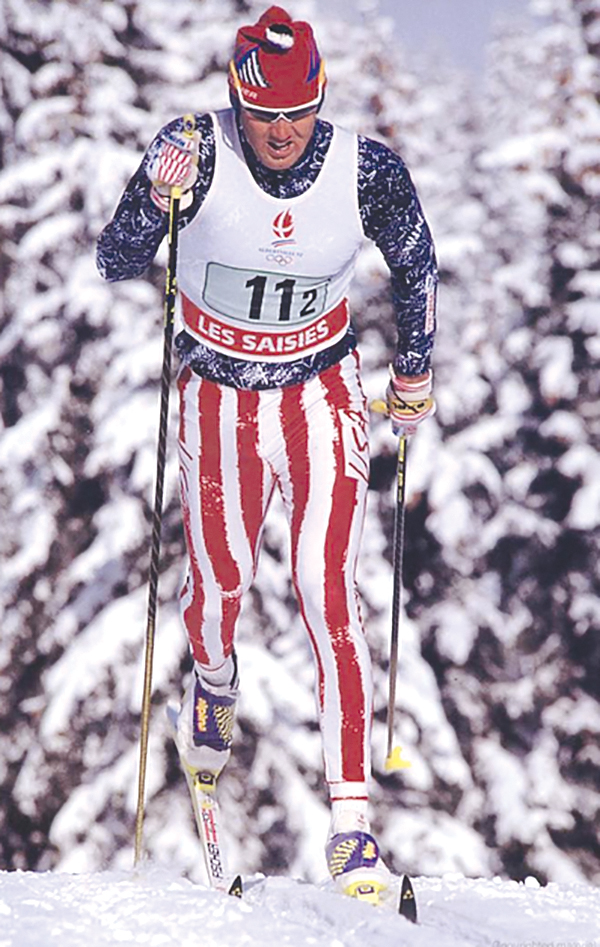
Ben Husaby doesn’t consider himself a prototypical athlete. A quick Google search of his name unearths a bunch of self-admitted “oddball” quotes.
The two-time Olympian doesn’t ski much anymore. Time, he says, has a way of changing priorities. “Some people keep going the same way, and I moved on,” Husaby says. “I put my energy into showing other people the joys of being outside. There’s so much more about this 360-degree experience of being physically active than just competition.”
He admits it’s hard not to be jaded as a U.S. endurance athlete in the Olympics when it comes to performance-enhancing drugs. “We know we’re competing against countries willing to do whatever it takes to win,” he says. Husaby took another path. “Winning for me wasn’t that important,” he says. “I decided to maximize the potential I had for myself and take in as much as I could and learn as much as I could. I could go on and on about all the really cool things I did because of being an Olympian.”
Jeff Isaacson
Men’s curling
2010, 2014 Winter Olympics

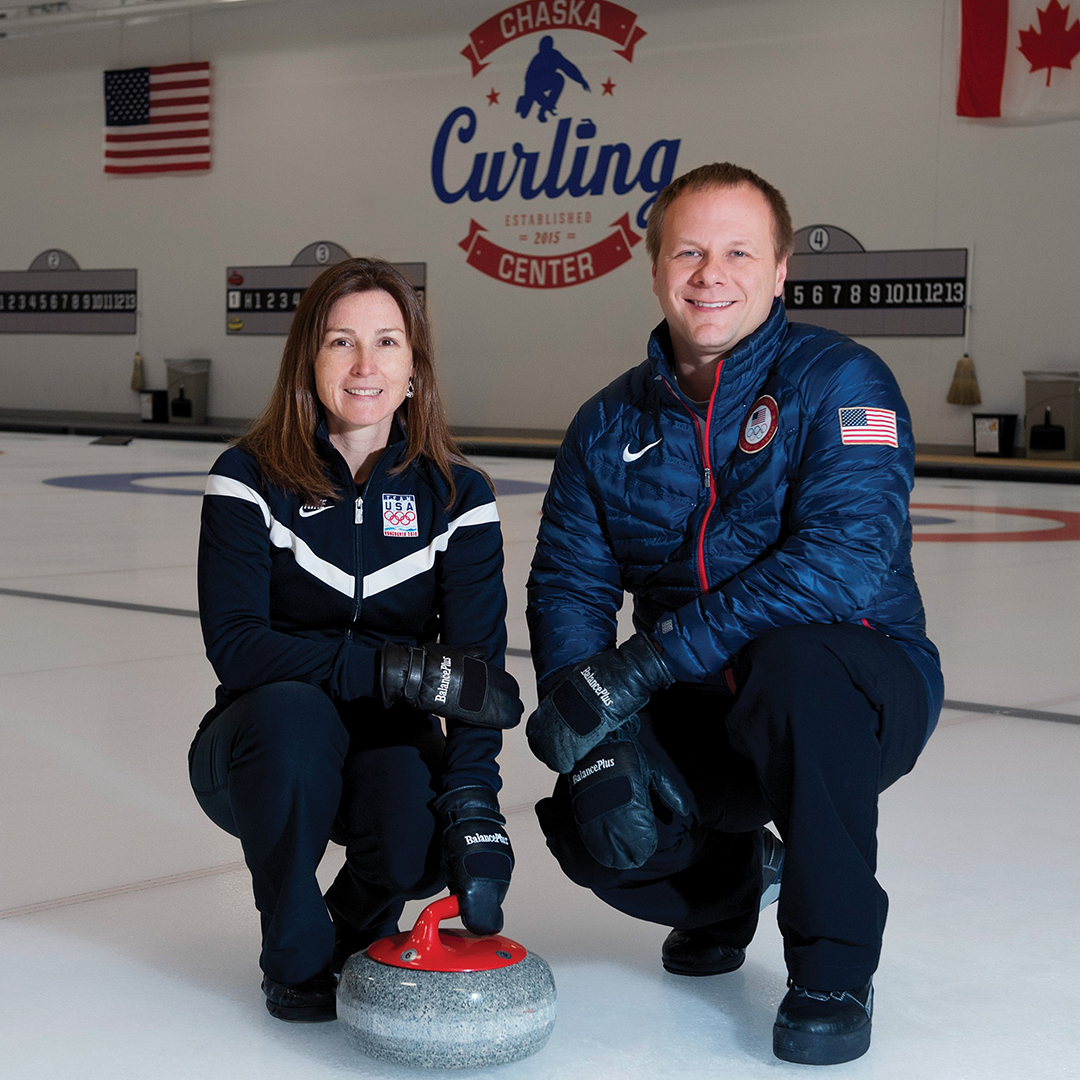
Jeff Isaacson will watch the PyeongChang Olympics on TV from Chaska. That’s a much different view than the right-in-the-action one he had during the past two Winter Olympics as a member of the U.S. men’s curling team.
After 20 years of curling competitively, Isaacson is fine with that. He’s enjoying his role as manager of the Chaska Curling Center, which he has held since it opened in 2015. “Truthfully, I thought I would miss it,” says Isaacson, who lives in Chaska. “I really don’t. I work in a curling facility, so I’m always around it. But I played for many years, and think I got what I wanted out of it.”
Isaacson participated in two Olympic games, 2010 in Vancouver and 2014 in Sochi. He looks back with pride on his curling career. “To say you’ve competed in two Olympic games, I think that tells a lot about somebody’s character,” he says. “I can’t even think about how many practice rocks I’ve thrown, the time and money that I sacrificed. So, yeah, I did it because I liked the game, and I’m proud of what it’s done for me.”
Allison Pottinger
Woman’s curling
2010, 2014 Winter Olympics
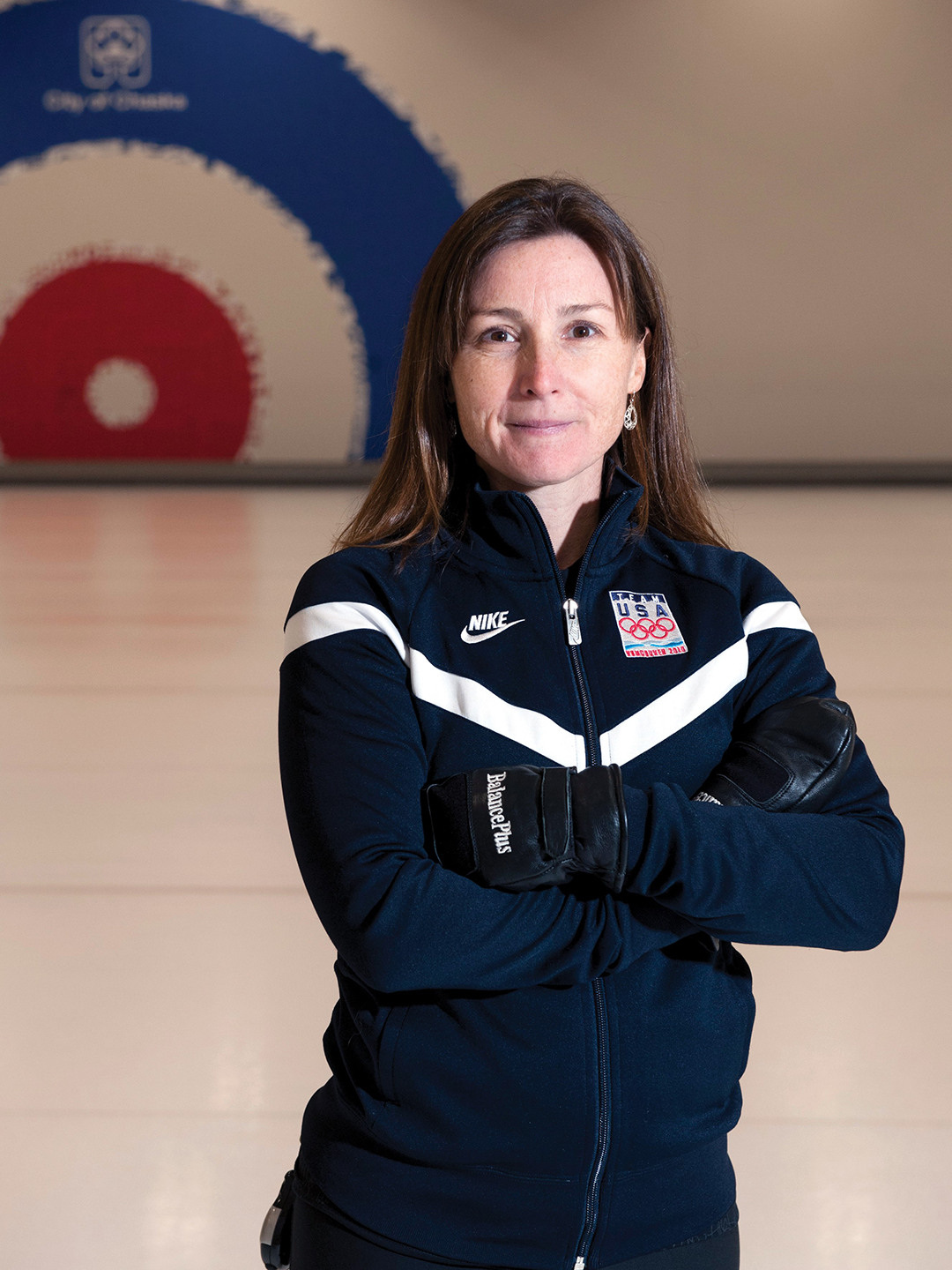
Allison Pottinger will never forget walking with her fellow U.S. athletes in the opening ceremony of the 2010 Vancouver Olympics. “It was surreal, a little overwhelming,” the Eden Prairie resident says. “When you come in as one big team, you realize this is bigger than anything we’ve been in before.” Pottinger—the USA female curling athlete of the year in 2008 and 2012—has competed on big stages throughout her career.
Pottinger and the three other members of her U.S. woman’s curling team didn’t fare well in Vancouver. Neither did the team that went to the 2014 Sochi Olympics, in which she served as an alternate.
“Both Olympics were amazing,” she says. “The best ice makers in the world are there, the best rocks, there’s nothing to be unhappy about at the Olympics.”
She doesn’t dwell on the disappointments. “I feel like I can handle most situations I get put in now because I was able to handle that—good, bad or indifferent,” she says. “It gives you a chance to say to yourself, ‘Allison, remember that you accomplished these things. You can handle whatever is coming next.’”
Pottinger’s team decided not to vie for another Olympic run, in this month’s PyeongChang games.
The traveling and training was getting to be too much. Pottinger has no regrets. “I didn’t feel like I left anything on the table,” she says.
Dave Snuggerud
U.S. men’s hockey
1988 Winter Olympics
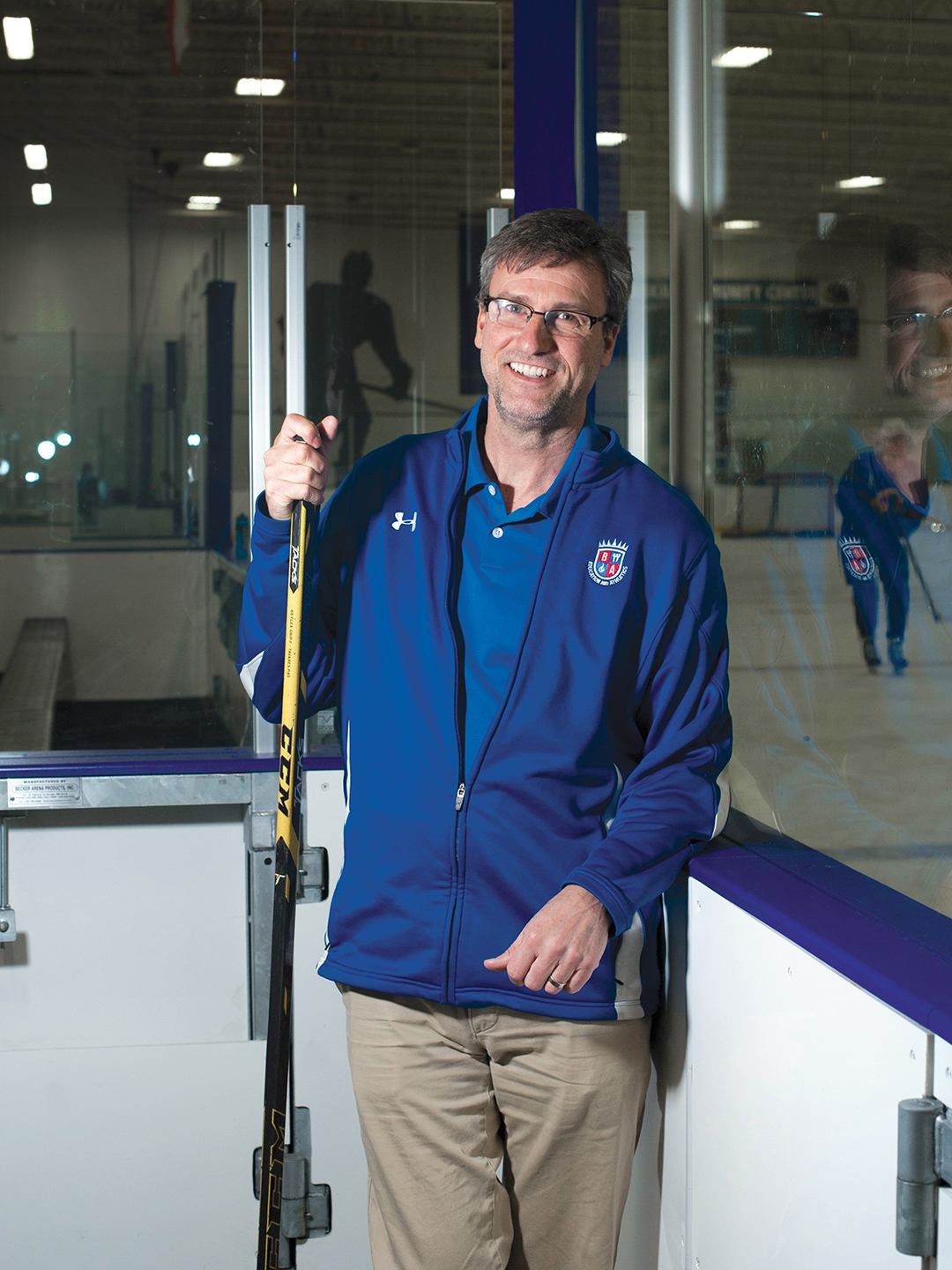
Dave Snuggerud’s life remains focused on the ice 30 years after playing on the U.S. men’s hockey team in the 1988 Calgary Olympics.
Snuggerud is director of education at Breakaway Academy in Chaska, the private school he started with partner Andy Brink five years ago. Snuggerud is also the head hockey coach at Chaska High School.
The Chaska resident doesn’t talk about his Olympic experiences with the students. “I’m an old guy,” jokes Snuggerud, who had been a middle school teacher in the Wayzata School District. “I’m just a teacher to them.”
Modesty aside, he’s more than that. Besides being a member of the 1988 men’s hockey team, he captained the University of Minnesota’s hockey team in 1989 and then played five seasons in the National Hockey League for three teams.
“Hockey was always something I wanted to pursue, and see how far I could take it,” he says. “I had many breaks along the way to help me get as far as I did. But, it really taught me the importance of hard work and failure, and when you fail, how do you respond to it.”
Snuggerud admits he wishes his Olympic team would have placed higher—the team didn’t make the medal round and ended up placing seventh. He cherishes the experience, especially seeing how other Olympic athletes trained and prepared. “The goal, of course, was winning and being the best at whatever the sport these athletes were doing,” he says. “But the fallback of the experience, or participating in the Olympics, made it feel like I ended up winning in the end.”